MAKING
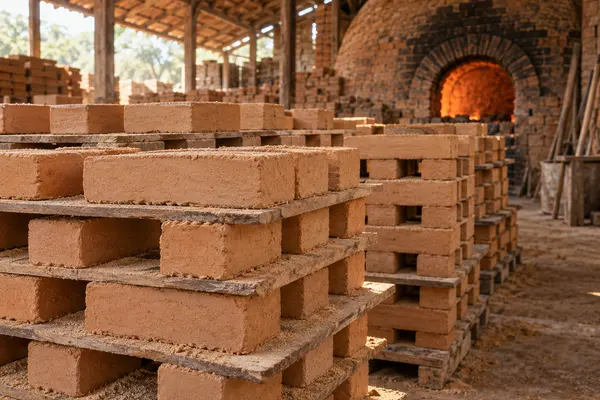
Fire the clay
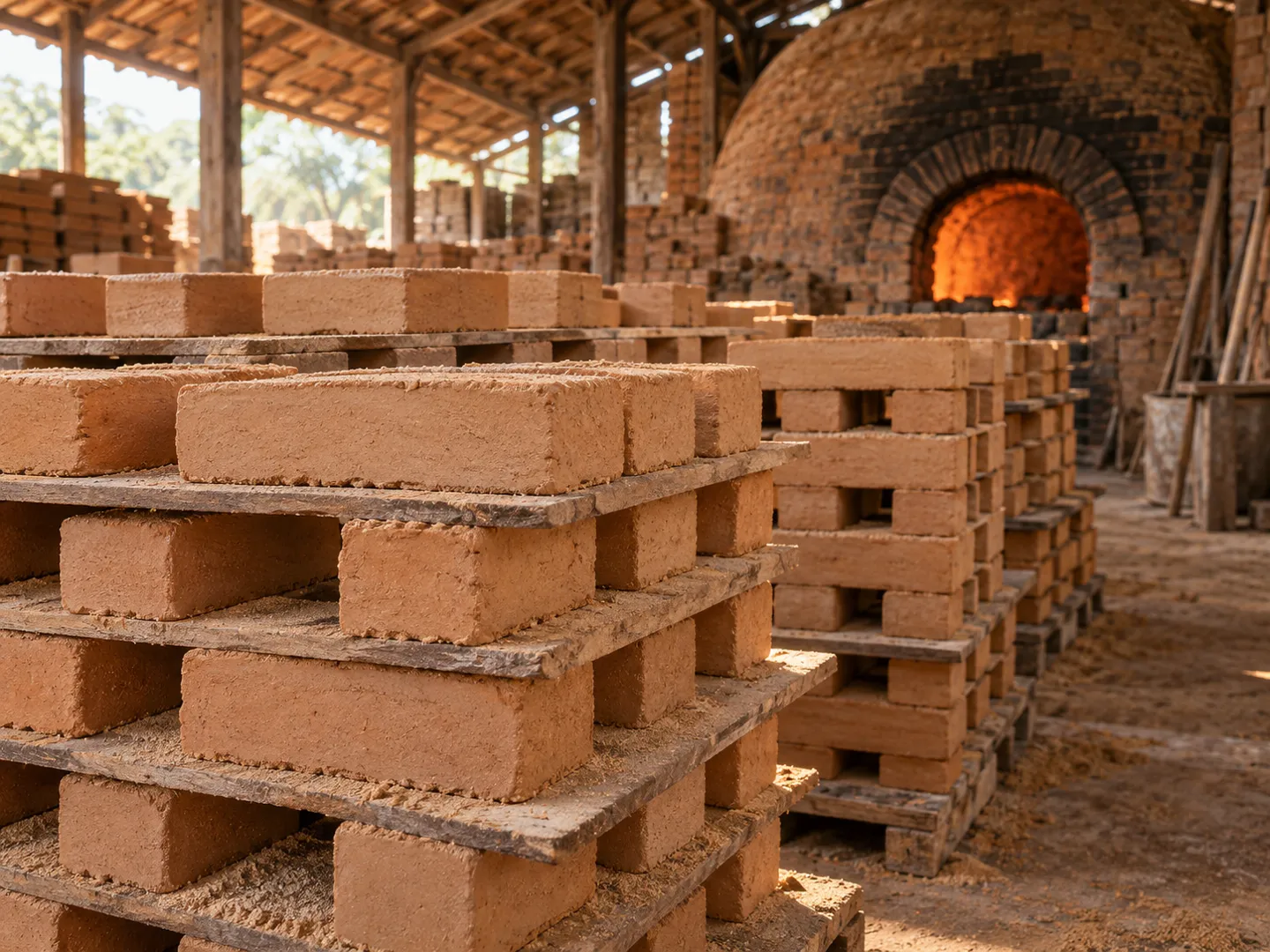
Moulded clay is dried, then heated to roughly 900 to 1,000 °C to turn it into a hard, usable brick.
The numbers doodlebrick
CLAY, FIRE AND PATTERN
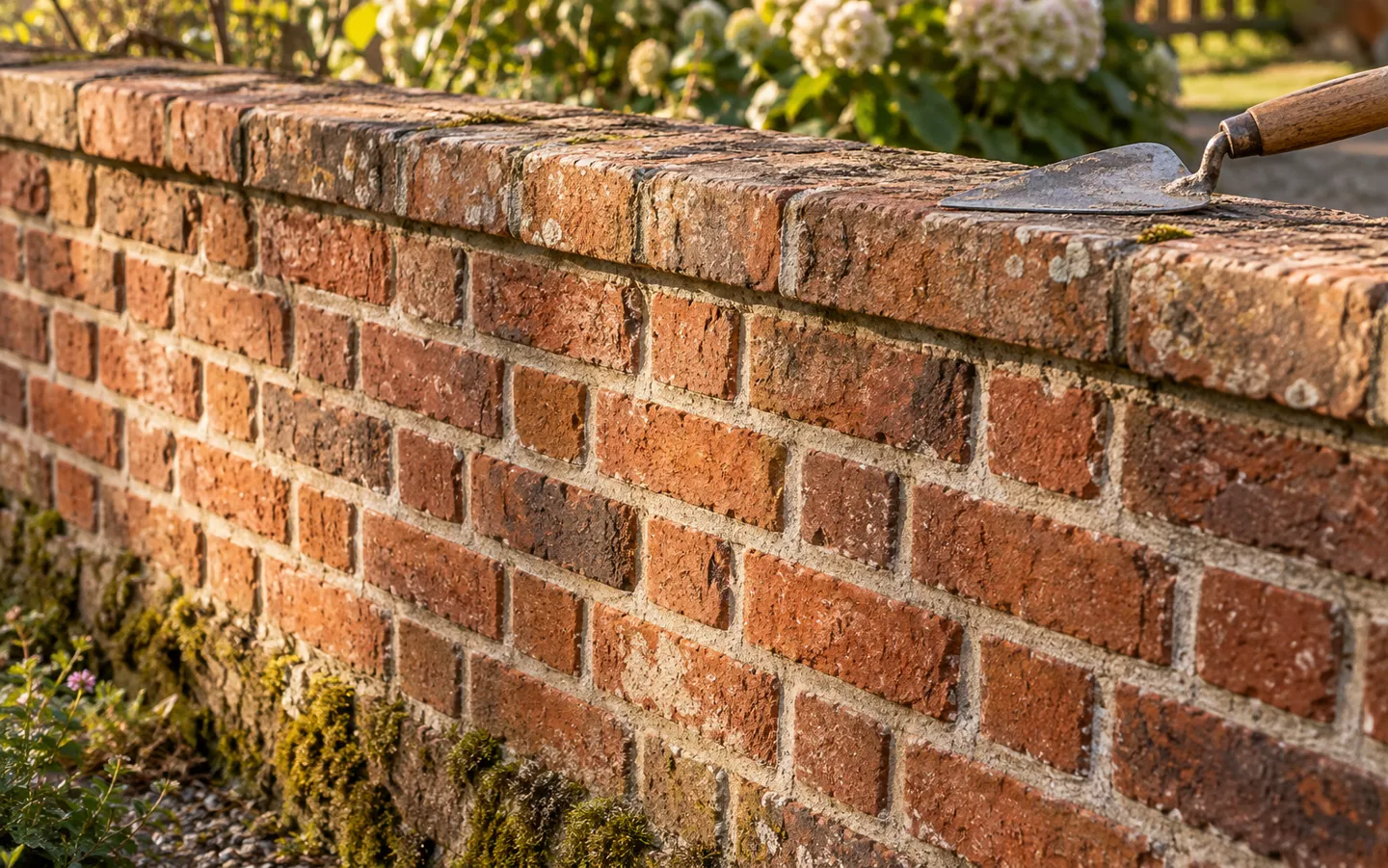
Every brick wall is a small piece of engineering hiding in plain sight.
A brick starts as wet clay and ends as stone-hard ceramic after a long, hot firing. How the bricks are then arranged, the bond, decides how well a wall holds together and often tells you roughly when it was built. Here is how it works, in plain English.
Plain English, with the sources linked.
BOND headers + stretchers
Try the bond spotterTHE SHORT ANSWER
Three ideas explain
almost every brick wall you pass.
MAKING
Moulded clay is dried, then heated to roughly 900 to 1,000 °C to turn it into a hard, usable brick.
The numbersSIZE
A UK brick is 215 x 102.5 x 65 mm. Two ends plus a joint equal one long side, so bricks can turn and cross.
See the sumBOND
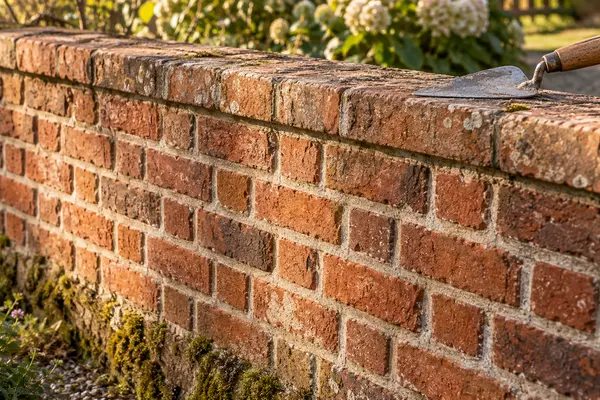
Bricks laid across the wall (headers) tie its two faces together. The bond is how they are mixed in.
Spot the bond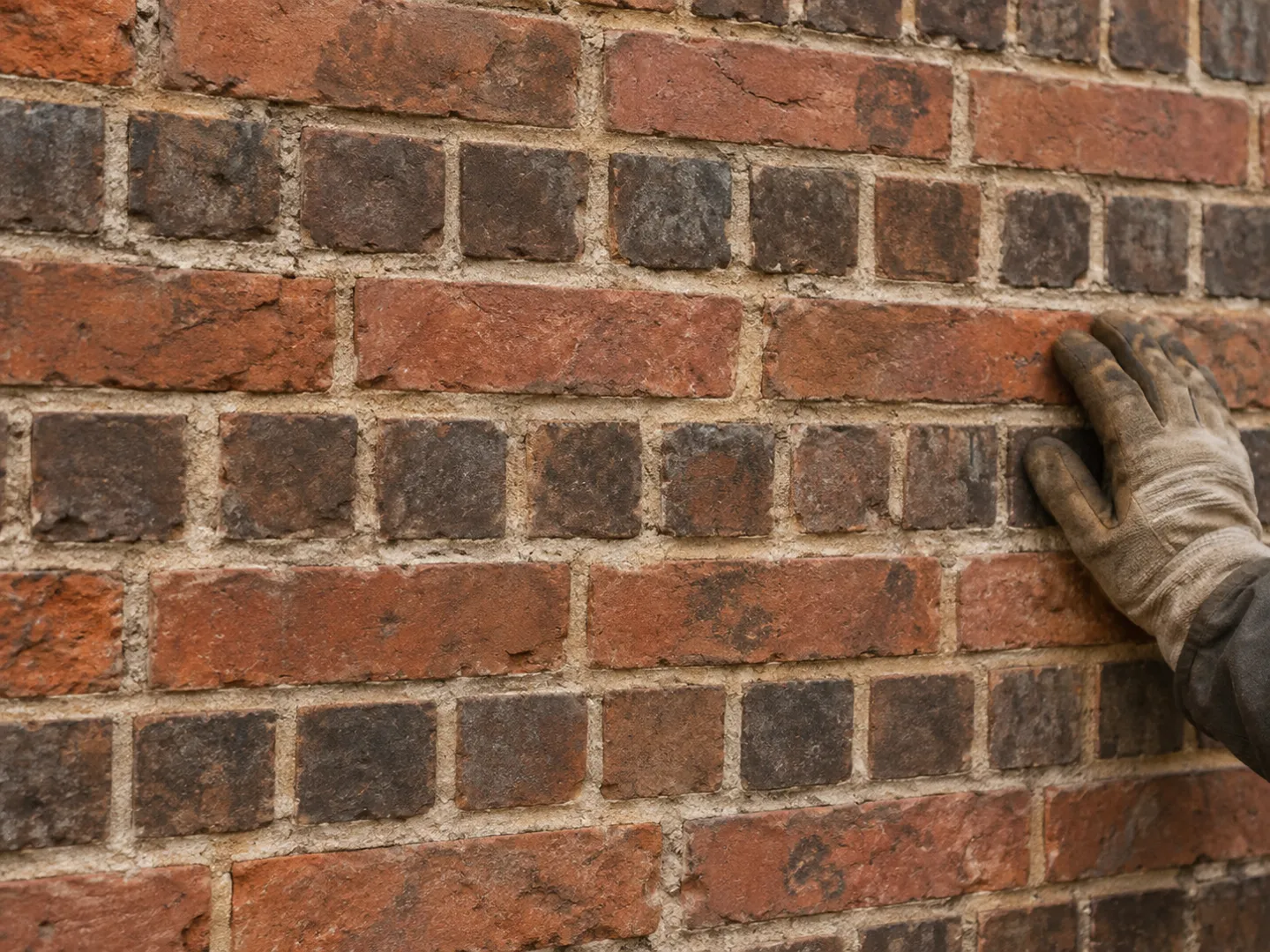
READ A WALL
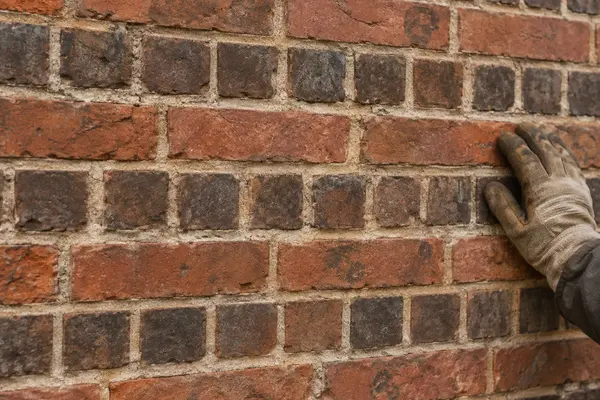
Look for square brick ends among the long faces. If there are none at all, you are probably looking at stretcher bond.
If long faces and short ends alternate along every row, it is Flemish bond. Whole rows of short ends point to English bond.
Some modern walls include cut half bricks, called snap headers. They look like headers from outside but do not reach into the wall.
A faint chequer of darker ends can be a sign of older handmade bricks, since headers often fired darker in the kiln.
TWO NUMBERS WORTH KNOWING
The heat makes the brick.
The arithmetic makes the wall.
900–1,000 °C
Heat needed for a usable brick
Clay is warmed slowly to about 120 °C until its pore water has gone, then driven on through several hundred degrees to roughly 900 to 1,000 °C, when it turns into durable ceramic.
FIRING
102.5 + 10 + 102.5 = 215
Two headers plus one joint
The standard UK brick is 215 mm long and 102.5 mm wide. Two brick ends and a 10 mm mortar joint match one long face exactly, which lets headers and stretchers interlock neatly.
SIZE · BS EN 771-1
Under-fired bricks are more prone to damage from salts and frost, which is one reason firing has always mattered as much as the clay.
THE BOND SPOTTER
Pick a bond to see its pattern. Long faces are stretchers; the short ends, drawn darker here, are headers, bricks laid across the thickness of the wall.
Headers were often a little darker because they fired darker in the kiln, which is why some old walls show a subtle chequer.
BRICK FACTS
Fired clay bricks from the Xinjie site in northwest China date to about 5,000 to 5,300 years ago, the earliest found in East Asia, according to the Chinese Academy of Sciences.
By the sixteenth century English bond, alternating courses of stretchers and headers, had become the norm.
Despite the name, Flemish bond is not Flemish in origin. Examples appear in England from around the seventeenth century, and it was popular by its end.
Twentieth-century cavity walls have a single brick face, usually in stretcher bond with no headers other than cut snap headers.
A brick tax ran from August 1784 until March 1850. From 1801, bricks larger than 10 x 5 x 3 inches paid double duty.
QUICK QUESTIONS
Short answers to the questions people ask most.
The work size of a standard UK clay brick is 215 x 102.5 x 65 mm, under the European Standard BS EN 771-1. Add a 10 mm mortar joint and each brick takes up 225 mm of length and 75 mm of height on the wall.
Clay is first heated gently to drive off its water, up to about 120 °C. It then has to be taken on to roughly 900 to 1,000 °C to become a usable fired brick, according to the British Brick Society.
English bond alternates whole courses: a row of long faces (stretchers), then a row of short ends (headers). Flemish bond alternates stretchers and headers within every single course.
Most twentieth-century walls are cavity walls: an inner wall of blocks and an outer leaf one brick thick. That outer leaf is usually built in stretcher bond, with no headers apart from cut "snap" headers used for looks.
Britain taxed bricks from 1784 until 1850. From 1801, bricks larger than 10 x 5 x 3 inches paid double duty, which discouraged large bricks. A 1997 study argues large bricks were not themselves a product of the tax.
Updated
A NAME TO BUILD ON
doodlebrick.com is part of the DoodleSale portfolio. It isn't in an auction right now, but you can ask about leasing it.